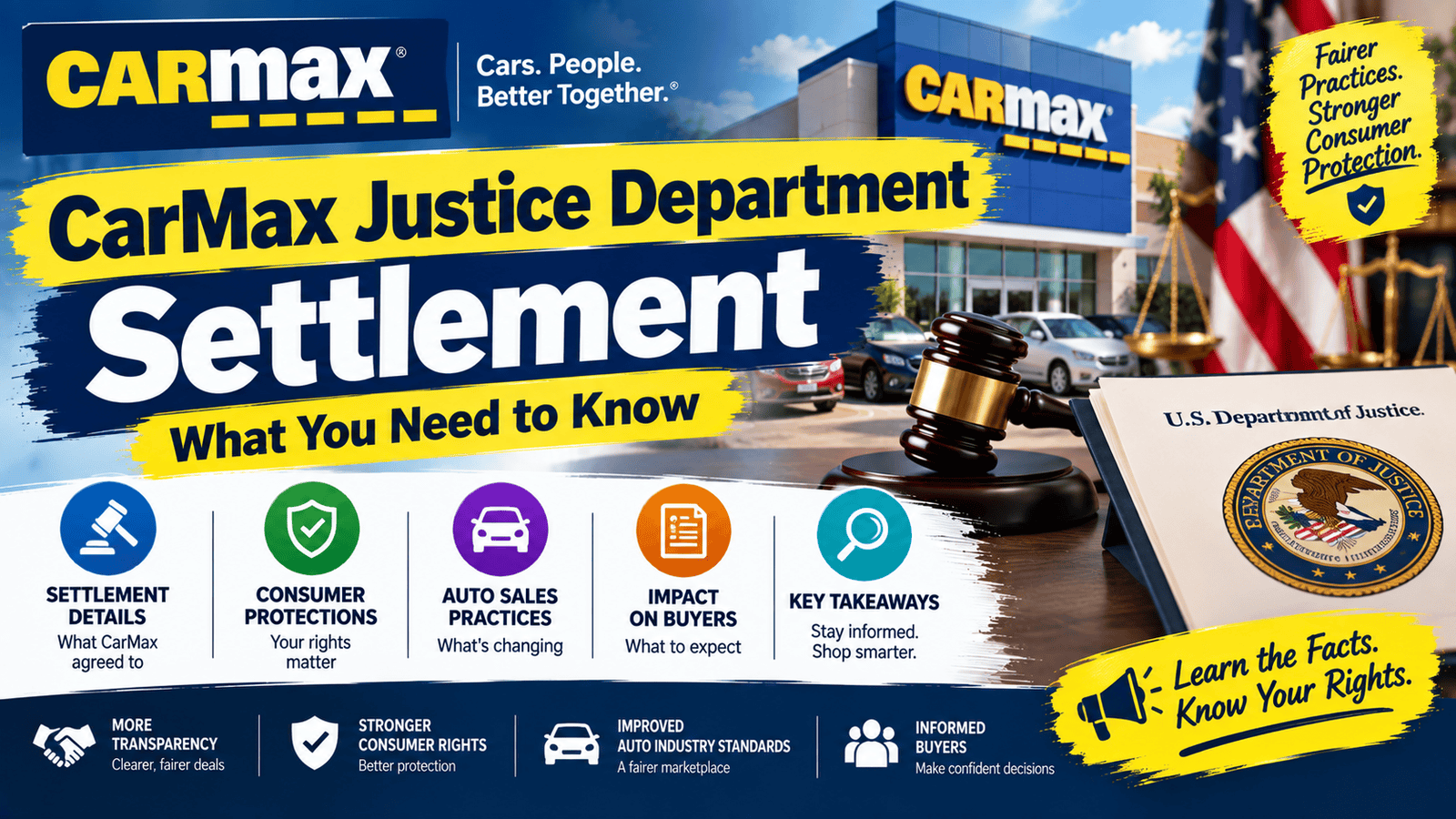
CarMax Justice Department Settlement: What You Need to Know
The CarMax Justice Department Settlement announced in February 2026 has attracted significant attention because it involves the repossession of vehicles belonging to U.S. military servicemembers. The settlement resolves allegations that CarMax, Inc. violated the Servicemembers Civil Relief Act (SCRA) by repossessing vehicles without first obtaining court orders required under federal law. According to the U.S. Department of Justice (DOJ), the agreement requires CarMax to provide at least $420,000 in compensation to affected servicemembers and pay a $79,380 civil penalty to the United States.
The case is important not only for CarMax customers but also for servicemembers who rely on federal protections while serving in the military. The settlement also requires CarMax to change certain policies, procedures, and employee training relating to SCRA compliance.
What Is the CarMax Justice Department Settlement?
On February 23, 2026, the Justice Department announced that it had reached a settlement with CarMax to resolve allegations involving vehicle repossessions. The DOJ alleged that CarMax repossessed vehicles belonging to at least 28 servicemembers who were protected by the SCRA without obtaining the court orders required by law.
The settlement was designed to resolve the government’s allegations without a lengthy court proceeding. Importantly, the settlement agreement states that it does not constitute evidence or findings against CarMax, and the civil claims were settled without an admission of liability.
The financial portion of the agreement includes compensation for affected servicemembers and a separate civil penalty paid to the federal government.
What Is the Servicemembers Civil Relief Act?
The Servicemembers Civil Relief Act, commonly known as the SCRA, is a federal law that provides legal and financial protections to eligible members of the U.S. military.
One important SCRA protection involves motor vehicles. Under the circumstances covered by the law, an auto finance or leasing company generally cannot repossess a servicemember’s vehicle without first obtaining a court order when the servicemember made at least one payment before entering military service. Members of reserve components can also receive protection once they have received orders to report for military service.
These protections are intended to prevent military service from causing additional financial hardship. Servicemembers may face deployments, transfers, or changes in income while serving, making legal protections involving financial obligations particularly important.
What Did the DOJ Allege Against CarMax?
According to the Justice Department, CarMax allegedly repossessed vehicles belonging to at least 28 servicemembers without obtaining the required court orders. The government also alleged that some vehicles were repossessed after borrowers had already informed CarMax that they were serving in the military.
The settlement agreement provides additional details. The DOJ alleged that many of the violations were connected to CarMax policies that did not require the company to check the Defense Manpower Data Center (DMDC) database before repossessing vehicles in certain charge-off situations.
The government also alleged that CarMax’s procedures did not prohibit repossessions involving reservists who had already received orders to report for military service at a future date.
These allegations are significant because the SCRA requires businesses dealing with protected servicemembers to take appropriate steps before carrying out certain actions.
How Much Will CarMax Pay?
The settlement involves two major financial components.
First, CarMax must pay at least $420,000 in damages to servicemembers identified as having been affected. Second, the company must pay a $79,380 civil penalty to the United States. Together, those amounts total at least $499,380, which is why the DOJ described the resolution as nearly $500,000.
The settlement agreement also provides a compensation formula for qualifying repossessions. According to the agreement, affected individuals can receive a payment of $15,000, subject to specified adjustments, as well as compensation for qualifying lost equity in the repossessed vehicle.
Who Could Be Affected by the Settlement?
The settlement specifically concerns servicemembers whose vehicles were allegedly repossessed in violation of SCRA protections.
The DOJ’s settlement materials identify at least 28 servicemembers whose vehicles were involved in the alleged violations. However, the agreement also establishes a process through which additional repossessions could be identified. The United States was authorized to review relevant account information against military-service records and investigate potential additional violations.
This means that the settlement was not simply limited to the initial group identified during the government’s investigation.
What Changes Must CarMax Make?
The CarMax Justice Department settlement goes beyond financial payments. It requires the company to strengthen its compliance procedures.
CarMax must revise its policies and procedures concerning SCRA protections and vehicle repossessions. The company must also update relevant training materials so employees understand their responsibilities when dealing with protected servicemembers.
The agreement also addresses military-status verification and requires appropriate review of information concerning military service. These changes are intended to reduce the likelihood of similar repossession problems occurring in the future.
The DOJ settlement therefore combines financial compensation, a civil penalty, policy changes, employee training, and compliance monitoring.
Why Is the Settlement Important?
The settlement highlights the importance of federal protections available to military personnel.
For servicemembers, a vehicle may be essential for commuting, family responsibilities, medical appointments, and other everyday needs. An improper repossession can therefore create more than a financial problem. It can interfere with a servicemember’s ability to manage personal and family obligations during military service.
The Justice Department has emphasized that businesses must respect the legal protections provided by the SCRA. The CarMax case demonstrates that federal agencies can investigate alleged violations and require companies to compensate affected servicemembers while changing their compliance practices.
What Should Servicemembers Do If They Believe Their Rights Were Violated?
Servicemembers or dependents who believe their SCRA rights may have been violated should consider seeking advice from an appropriate legal assistance office.
The Justice Department recommends that servicemembers and their dependents contact the nearest Armed Forces Legal Assistance Program Office if they believe their SCRA rights have been violated.
People who believe they may be covered by the CarMax settlement should also keep relevant documents, such as financing records, repossession notices, military orders, correspondence with CarMax, and records showing when the company was informed of military status.
Because individual circumstances can differ, legal advice can be useful when determining whether a particular repossession falls within the protections of the SCRA or the settlement.
Is This CarMax’s Only Legal Settlement?
No. CarMax has been involved in other regulatory and legal matters that are separate from the 2026 DOJ settlement.
For example, in March 2026, several California district attorneys announced a separate $1.1 million consumer protection settlement involving allegations concerning delays in transferring vehicle titles to customers. That case was unrelated to the federal SCRA settlement.
CarMax also reached a separate Justice Department settlement in 2022 involving allegations that certain job advertisements posted on college recruiting platforms unlawfully restricted opportunities based on citizenship status. CarMax agreed to pay $186,480 in that matter.
Therefore, when searching for information about the CarMax Justice Department settlement, it is important to distinguish the 2026 military-repossession case from earlier legal matters involving the company.
Key Facts About the CarMax DOJ Settlement
- Settlement date: February 23, 2026.
- Company: CarMax, Inc.
- Federal agency: U.S. Department of Justice.
- Law involved: Servicemembers Civil Relief Act (SCRA).
- Allegations: Repossession of vehicles belonging to protected servicemembers without required court orders.
- Vehicles initially identified: At least 28.
- Servicemember compensation: At least $420,000.
- Civil penalty: $79,380 to the United States.
- Additional requirements: Policy revisions, compliance procedures, employee training, and related monitoring.
- Important legal point: The settlement resolves allegations and does not constitute an admission or finding of civil liability by CarMax.
Final Thoughts
The CarMax Justice Department settlement demonstrates why the Servicemembers Civil Relief Act remains an important protection for members of the U.S. military. The DOJ alleged that CarMax repossessed vehicles from protected servicemembers without obtaining court orders required by federal law. The resulting agreement requires nearly $500,000 in combined compensation and penalties, along with significant changes to CarMax’s compliance practices.
For servicemembers, the case serves as a reminder that federal law provides specific protections against certain financial actions while they are serving. For businesses, it reinforces the importance of identifying protected military customers and maintaining procedures that comply with federal requirements.
Anyone who believes their vehicle may have been improperly repossessed should review their records and seek qualified legal assistance. The DOJ’s official settlement information provides the most reliable source for understanding the scope and requirements of the agreement.